LEADERSHIP vs RULERSHIP
THE TYRANNY OF GOVERNMENT
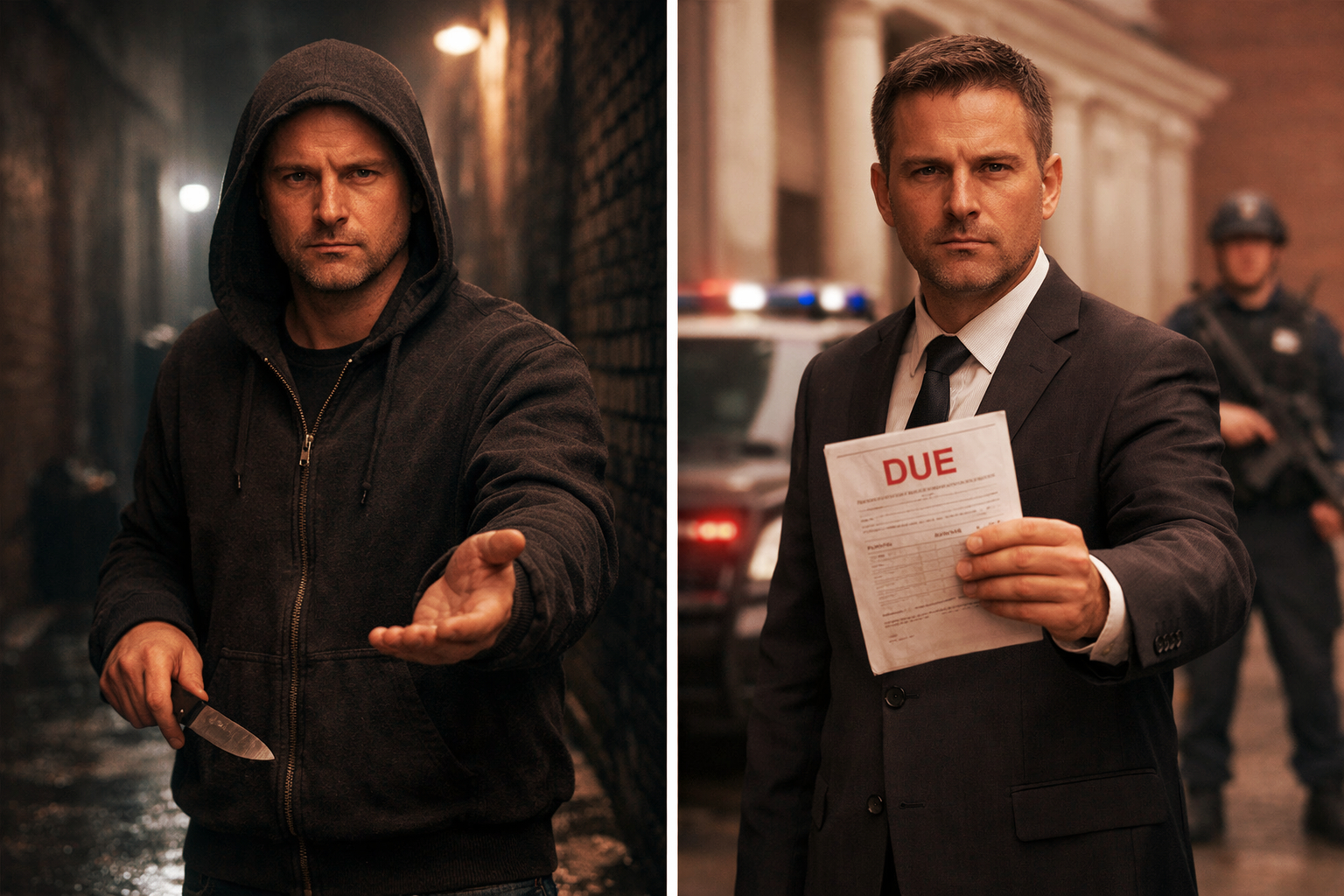
True leaders inspire, empowers, and uplifts, rather than oppress. Apposed to demanding submission, leadership earns voluntary trust through integrity, wisdom, and moral example. Most importantly, it never violates the freewill, rights, or dignity of another. Leadership aligns with Natural Law: it protects Truth, respects Autonomy, avoids Harm, and restores Justice.
In contrast, every act of rulership rests on a violation of Natural Law: coercion robs Autonomy, censorship steals Truth, taxation seizes property under threat, and war is the theft of life itself. By this measure, government governments cannot be called leaders, they are rulers. Ruthless tyrants cloaked in the illusion of “authority”. They do not guide, they control. They do not lead with wisdom, they rule with punishment. They rely on fear, deception, and violence to maintain their power, stripping away freedoms, silencing dissent, censoring opposition, and coercing the masses into compliance.
This is the essence of rulership – domination disguised as leadership. But leadership, looks very different.
If morality is truly objective – as established earlier in this book – then coercion, the act of forcing obedience through threat or harm, must be judges as immoral regardless of who enacts it. A ruler with a badge is no more morally justified in coercion than a thief with a weapon. The act is the same; only the costume differs.
A moral principle that applies to the individual also applies to the collective. You cannot alchemize immorality into virtue by forming a committee. Coercion is wrong and there is no exemption for uniforms and flags. True morality is universal and unchanging, so how can any system based on coercion be considered morally legitimate?
We’ve been taught that when a group of individuals wear titles, uniforms, or sit behind government desks, they somehow gain moral rights that single individuals do not have. But morality does not change with rank or by ritual. If it’s wrong for a citizen to steal, it is wrong for a tax collector. If it’s wrong form e to force you to obey me, then it’s wrong for a lawmaker to do the same. No transfer of power, no vote, badge, or oath can convert an immoral act into a righteous one.
Would you accept this logic in any other context? If three neighbors vote to take your pay check, does the vote make it moral? If a mob forces you to follow their rules under threat of exile or violence and call it peace and order, does that make their rule just? If not, then why does government get a moral pass for the same actions?
We’re told we consented to this system. That by being born into it, by using its roads, or by living within its borders, we’ve agreed to its rules. But none of that is consent. That’s coercion dressed up as agreement. Choosing to participate out of fear or for survival does not make that participation voluntary – it makes it compulsory under pressure. Real consent is not born from desperation, nor preserved through threat. It must be offered freely, or it is not consent at all.
From birth, we are taught that obedience is virtue. We pledge allegiance before we understand what that pledge even means. We are graded not for exploring our skills, but for following cookie-cutter instructions. We are rewarded for sitting still, staying silent, obeying rules and following orders – no matter how arbitrary. This isn’t education. It’s indoctrination. And by the time we reach adulthood, questioning “authority” feels like a moral wrong.
But when did obedience become more honorable than conscience? When did compliance become the definition of “goodness”? And when did utility become more trustworthy than principles?
When compliance is treated as virtue, enforcement becomes inevitable – because what happens when someone refuses? The rule becomes sacred simply because it exists, and anyone who questions it is branded irresponsible, reckless, dangerous, or criminal. When a system equates compliance with goodness, it creates the perfect environment for control. Rules are no longer judged by whether they are right or wrong, but simply by whether they are obeyed.
And nowhere is it easier to see than in the quiet coercions that enter our daily lives through the smallest, most mundane rules.
For example, consider something as simple as a “seatbelt law”, where one is required by law to wear a seatbelt while driving. The question is not whether wearing a seatbelt is beneficial, the question is whether anyone has the moral right to force another peaceful individual to wear one. Although wearing a seatbelt is a wise decision, it remains the individual’s choice whether he wishes to do so.
If I choose to drive without my seatbelt, I’m primarily accepting the risk to myself. I’m not initiating harm against another person or putting anyone else in danger. Yet the state claims the “authority” to stop me. A man on a motorcycle pulls you over for the “safety reason” of not wearing a seatbelt. One might think that saying thank you and fastening your belt would resolve the matter – but try it. Drive off and see what happens. You will be chased, forcibly stopped, violently arrested, and threatened to be caged unless you agree to pay the state money in form of a fine – effectively making your disobedience “legal for a price”. Refuse to pay, and violence escalates. What began as a recommendation for safety becomes a command backed by force – and morality is replaced by payment.
This reveals that the issue is not the seatbelt, or you safety. It is the claim of “authority” behind the rule. Any reasonable person understands the benefits of wearing a seatbelt and may freely choose to do so. But when that same action is compelled through the threat of punishment, it is no longer guidance through conscience – it is control through coercion.
The same mechanism appears everywhere once you learn to see it.
During the Covid-19 lockdowns, people were fined or forcefully arrested simply for leaving their homes, opening their businesses, or visiting family members. Regardless of the justification given, peaceful individuals were compelled to obey under threat of punishment. Public health recommendations quickly became government commands when acts as peaceful as watching a sunset on the beach were treated as violations deserving of state force.
Military conscription follows the same pattern. In many countries, young men – barely adults – are legally forced to leave their homes and families to serve in the military and fight causes the may not believe in. Refusal is not treated as moral disagreement but as a crime punishable by imprisonment.
Prohibition laws reveal the same logic of control in another form. Individuals are forbidden from peacefully producing, selling, or consuming certain substances – unless they first obtain government approval. Someone may brew and sell alcoholic drinks to consenting adults – yet without a license it’s a crime. Nothing about the substance, the producer, the method, or the consumer as changed; only a stamp on a piece of paper declaring the activity “approved”. Instead of personal responsibility, prohibition replaces choice with force.
A true leader guides without force. They earn loyalty. They inspire action. They never demand submission. Contrast this with rulers – who issue commands, enforce them with threats, and punish those who resist. One leads through respect. The other governs through fear. One creates more leaders. The other manufactures dependents.
Different rules, different contexts – but the same underlying, delusional claim: that some people possess the moral right to command others and punish those who refuse.
The ruler’s command always requires theft – theft of will, theft of truth, theft of autonomy, even the theft of life. The leader’s guidance requires none. One violates Natural Law by its very nature. The other lives in harmony with it.
It is not truth that sustains the power of the system, but illusion. That is why rulers do not debate those who disagree; they erase them. Real leaders invite dissent because truth is their ally. Rulers suppress dissent because truth is their enemy.
Censorship is a tool of rulers, not leaders. Governments around the world silence those who expose corruption or challenge their narratives. Journalists imprisoned, whistleblowers exiled, and citizens assassinated. All to suppress the truth and preserve their control.
In 1971, military analyst Daniel Ellsberg leaked what became known as the Pentagon Papers – thousands of classified pages exposing years of deception surrounding the Vietnam War. The documents revealed that U.S. officials privately knew the war was unwinnable while publicly assuring their citizens that victory was within reach. Presidents, generals, and intelligence officials had continued sending young men to die while concealing the truth from the very public funding and fighting the war. When newspapers prepared to publish the documents, the government rushed to the courts in an attempt to stop the story from ever reaching the people. The Supreme Court ultimately allowed publication, exposing not just a failing war, but a government willing to lie to its own population to keep it going.
The deception continues. The Central Intelligence Agency has long claimed to be a shield against foreign threats. But history reveals a darker truth: the CIA has inflicted more harm on its own population than many of the “enemies” it was created to fight.
In the 1980s and ‘90s, investigative journalist Gary Webb exposed that the CIA directly supported Nicaraguan Contra rebels by facilitating the importation and distribution of crack cocaine in U.S. cities. The drugs flooded black communities in Los Angeles and beyond, igniting a national epidemic that led to addiction, mass incarceration, and the destruction of generations. The CIA’s trafficking operations were not rumour, they were confirmed by declassified documents and internal memos. Yet instead of facing justice, the agency was shielded by the corporate media. Webb, the man who dared to reveal the truth, was publicly destroyed by major news outlets, stripped of credibility, and eventually found dead with two gunshot wounds to the head, ruled a suicide.
The agency never faced justice. No apologies. No consequences. Just another crime disguised as patriotism.
Similarly, in 2013, former intelligence contractor Edward Snowden exposed the existence of vast global surveillance programs operated by the National Security Agency, revealing that governments around the world were quietly collecting the private communications of millions of ordinary citizens while publicly denying such programs existed. What he uncovered confirmed that surveillance state had grown far beyond what citizens had been told. Rather than confront the deception, “authorities” charged Snowden under espionage laws, forcing him into permanent exile.
Times change. Continents change. But the censorship and deception stays the same:
Discussion of the Tiananmen Square Massacre remains heavily censored in China to this day. In 1989, Chinese troops opened fire on thousands of pro-democracy protestors gathered in Beijing’s Tiananmen Square, killing and injuring civilians who were demanding political reform. Today, search engines block it, textbooks omit it, and even coded references to the date – June 4th, 1989 – are scrubbed from the internet. An entire massacre is systemically erased from public memory so thoroughly that millions grow up never knowing it occurred.
After the Chernobyl disaster in 1986, Soviet authorities did not rush to warn the public – they rushed to hide the truth. Residents of nearby towns continued breathing radioactive air and drinking contaminated water while officials delayed evacuation and suppressed the scale of the catastrophe. The world only learned what had happened when radiation alarms in Sweden detected the fallout first, exposing a disaster the Soviet state tried desperately to conceal.
During the Rwandan Genocide in 1994, where hundreds of thousands were slaughtered simply for belonging to the “wrong” ethnic group, state-controlled radio stations flooded the airwaves with propaganda, dehumanizing the Tutsi population and directing mobs toward their targets. Independent voices were silenced while broadcasts openly called for extermination, turning lies into marching orders. When rulers control the narrative, even genocide can be reframed as duty.
These examples are not rare exceptions. They reveal a pattern repeated across decades and continents: when truth threatens power, the system moves to silence it.
A government that silences criticism does not protect the people, it protects its lies. If this is not true, then why are critics of “authority” silenced while liars are promoted? Why are facts labelled as hate speech and open debate treated as a threat? Why must truth be managed, censored, and filtered when it is the truth? If the system is just, why must it hide what it does? Truth stands on its own, so why would it need external protection? Or is it lies that require censorship to survive? If this system was based on morality and founded in truth, then why does it fear questions more than it fears violence?
When censorship fails – when truth slips through and people begin to question – the velvet gloves is quickly removed to reveal the iron fist. The illusion of leadership disappears, and rulership reveals its final tool: force.
In January 1919, Buenos Aires erupted in what would become known as La Semana Tragica – The Tragic Week. It began with a peaceful protest at the Vasena metalworks, where workers demanded humane conditions, fair wages, and basic dignity. The government answered not with dialogue – but with bullets.
Police and military units opened fire on unarmed protesters. As the days unfold, the repression escalated into open terror. Strikers were gunned down in the streets. Entire neighbourhoods were torched and raided in a rampage of state violence. Armed militias hunted suspected sympathizers while the government looked on.
And when families gathered to mourn their dead, soldiers shot into the funeral procession.
By the end of the week, as many as 700 innocent people had been killed, thousands injured, and thousands more imprisoned. Not for rioting. Not for violence. Bur for refusing to obey unjust demands in silence.
Fear is not a foundation for guidance. It is a tool of control. When obedience is extracted through punishment, leadership dies and rulership is born. Leaders earn trust and respect. Rulers demand obedience. They spread immorality under the banner of “authority”, choosing control over justice and domination over compassion. Rulers do not hesitate to sacrifice lives, liberties, or truth to protect their power and extend their reach, even over those who resist.
In South Africa, March 1960, thousands gathered peacefully in Sharpeville to protest the apartheid regimes newly passed laws – where Black South Africans were forced to carry documents at all times to control where they could live, work and travel. The demonstration was unarmed and deliberately peaceful. Protesters arrived without passes and asked to be arrested in an act of civil disobedience.
The government responded by turning a peaceful protest in to a slaughterhouse.
Police opened fire into the crowd without warning, unleashing a barrage of bullets into men, women, and children attempting to flee the carnage. Sixty-nine people were killed and nearly two hundred wounded. Many were shot in the back as they ran.
The message was unmistakable: the state would rather kill its own population than allow them to peacefully challenge its “authority”.
Leadership can only be earned. Authority must be imposed. And the more it is questioned, the more violently it defends itself.
In 1970, students protesting the expansion of the Vietnam War gathered at Kent State University in the United States. The Ohio National Guard was deployed to disperse them. Within minutes, guardsmen opened fire on unarmed students, killing four and wounding nine. A protest against a war built on lies was answered with war on the protesters themselves.
On January 30, 1972, civil rights marchers in Derry protested discriminatory policies imposed on the Catholic population. Soldiers from the British Army opened fire on the crowd, killing fourteen unarmed civilians. Officials initially claimed the victims were armed militants – a narrative quickly proven to be a lie.
In 1819, tens of thousands gathered peacefully at St Peter’s Field to demand parliamentary reform. Authorities responded by sending cavalry charging into the crowd with Sabers drawn, cutting down men, women, and children like animals. Fifteen people were killed and hundreds injured in what became know as the Peterloo Massacre.
These events are not accidents of history. They are the predictable outcome of rulership itself. When deception no longer manufactures obedience and dissent challenges “authority”, it becomes clear that rulers do not hesitate to resort to violence.
But violence alone cannot sustain rulership. Bullets can silence dissent for a moment, but fear must be sustained if control is to endure. For that, rulers require something else: enemies.
A population that feels safe begins to question “authority”. A population that feels threatened begs for protection. And so threats must be cultivated, exaggerated, or manufactured altogether.
Again and again throughout history, rulers have invoked danger to justify power – wars launched on false pretences, surveillance justified by unseen enemies, freedoms surrendered in exchange for promises of safety.
Fear, once planted, becomes the most reliable tool of control.
In 1964, the United States government told its people that American ships had been attacked by North Vietnamese forces in the Gulf of Tonkin. The event was sold with urgency, dramatized in headlines, and weaponized in Congress. Within days, the Gulf of Tonkin Resolution passed – handing President Lyndon B. Johnson a blank check for war.
The lie worked.
What followed was one the bloodiest military campaigns in modern history.
Over the next decade, more than 58 000 American soldiers and an estimated 2 million Vietnamese civilians were slaughtered. Entire villages carpet-bombed with napalm. Landscapes poisoned with Agent Orange. Children born deformed. Families wiped from existence. It wasn’t just war. It was annihilation. And it was all built on a fabricated incident that never happened.
Only in 2005, did declassified NSA documents confirm what whistleblowers and researchers had long claimed: the reported attack in the Gulf of Tonkin was a complete fiction. Even high-ranking military officials at the time knew it was false. Secretary of Defence Robert McNamara would later admit – off the record, and too late – that the public had been misled to justify the state murdering millions.
They knew.
They lied.
And they sold it to the public as patriotism – paid for in blood.
There was no punishment. No arrests. No reckoning. Just medals, promotions, and folded flags handed to grieving families who where never told the truth. This wasn’t a “mistake in intelligence.” It was a deliberate manipulation of fear – a political falsehood designed to manufacture consent for mass murder.
And fear had done its job.
This is what rulership does. It does not wait for danger. It invents it. Then always respond with force, never with truth.
After World War II, NATO quietly established a secret network across Europe known as Operation Gladio. Officially, it was created to prepare resistance forces in case of a Soviet invasion. In reality, parts of the network became something far darker.
Across countries like Italy and Belgium, networks of covert armies tied to far-right extremists and intelligent agencies, carried out real terror attacks against their own civilian population.
Bombs were planted in train station, public squares, and crowded markets. Killing innocent people was not an accident, it was the plan.
The blame was then placed on communist groups, left-wing activists, even anarchists, turning public fear into political leverage.
One of the most deadliest attacks came in 1980 known as the Bologna Massacre in Italy. A bomb tore through the city’s railway station, killing eighty-five people and injuring 200. Families waiting for trains were ripped apart in an instant.
Only later did investigations and declassified documents expose Gladio’s role – backed by NATO, coordinated through the CIA, and protected by silence.
This strategy was even named, The Strategy of Tension:
Create terror.
Blame “an enemy”.
Let fear push the public toward stronger authority.
This is the Hegelian Dialectic in action: create the problem, provoke the reaction, then impose the preplanned solution – more control, more power.
The civilians killed in those bombings were not collateral damage. They were the targets.
And when the bodies hit the ground, they pointed the finger elsewhere – not because they were confused. Because they had rehearsed it.
When fear isn’t enough to move the public, they spill blood to stir obedience.
Let that sink in: governments that claim to protect us, plan our deaths and kill us, blame an enemy, and weaponize our fear to tighten their control.
This isn’t national defense. This is trauma as policy.
This is fear, manufactured like a product, and sold at the price of human lives.
If Gladio shows how fear can be manufactured through terrorism, the events that unfolded in Indonesia show what happens when that fear is fully unleashed.
In 1965, President Sukarno was overthrown in a U.S.-backed military coup and the political crisis quickly framed as a communist conspiracy threatening the nation.
What followed was not a security operation. It was a nationwide extermination campaign.
Over the span of a single year, the Indonesian military, led by General Suharto, began hunting anyone suspected of communist sympathies. The definition of “communist” quickly expanded to include teachers, union members, artists, farmers, and ordinary civilians accused by neighbors or political rivals. Anyone who had ever spoken out.
Death squads swept through the villages.
Men dragged from their homes at night and executed on riverbanks. Woman were raped and tortured before being killed. Children watched in terror as their parent were murdered in front of them before receiving the same treatment. Entire villages erased. Bodies were dumped in rivers until the water ran red and clogged with corpses.
An estimated 500 000 to 1 million people were executed by their own government. Many more were tortured, imprisoned without trail, or forced into concentration camps.
This wasn’t done in the shadows.
The United States, United Kingdom, and Australian governments not only knew it was happening – they helped make it happen. Declassified records confirm that the U.S. supplied weapons, money, and crucial intelligence to assist in the killings. The CIA handed the Indonesian military a list of thousands of suspected communist – a literal kill list. British operatives ran black propaganda campaigns to demonize the victims and sway public opinion. Western governments quietly supported the purge while media outlets called the mass slaughter “a victory for democracy.”
Nearly a million people were butchered.
And when the blood dried, the architects of the massacre were welcomed by Western powers, invited to the White House, and propped up with decades of military and financial support.
It was not democracy. It was mass murder engineered for geopolitical convenience.
Not trails.
No truth commissions.
No reparations.
Only silence. And Praise.
Fear had not merely justified power. It justified genocide.
And when a million people can be slaughtered with full Western backing and buried beneath silence, then what does that say about the nature of rulership?
This isn’t national security. This is psychological warfare, carried out not by the manufactured foreign enemies, but by the rulers in your own government that claims to protect you, wearing the same flag you are told to trust.
The bombs fall, the bodies pile, and lie marches on – when all the blood is spilled, it calls itself heroic.
Rulership has never been confined to the past – it adapts, rebrands, and survives into every age. Rome’s emperors ruled through conquest and fear, elevating themselves as gods while crushing dissent with brutality. The British empire cloaked its domination of India in the rhetoric of a “civilizing mission”, disguising exploitation as benevolence. Modern democracies preach freedom while propping up dictatorship abroad, their slogans masking the same coercion. And totalitarian states like China and North Korea dispense with the pretence entirely, ruling openly through surveillance, fear, and control. The empire that ruled Rome, the empire that ruled India, and the empires that rule you today differ in time and costume, but their nature is unchanged: rulers that does not lead, but dominate.
And domination, by its very nature, requires fear to function. Not the kind of fear that comes from danger, but the kind that comes from punishment. We’ve been trained to believe punishment equals order, and order equals peace. But is peace truly peace when it is only maintained through threat of harm?
They have crossed the line. Not the one drawn by man’s law, but the one drawn by morality itself. Rulership is not a bug in the system. It is the system. It does not lead. It commands. It does not heal. It harms. It does not elevate. It suppresses.
This is what we’ve been calling leadership. A machine that feeds on silence, thrives on obedience, and punishes anything that resembles truth. It brands resistance as conspiracy, and morality as disobedience. Politicians in governments murder, censor, poison, imprison, and lie – yet they demand to be called righteous. And the masses, numbed by fear and conditioned by repetition, salute their captors with pride.
If evil had a throne, it would not look like chaos. It would look like order. Clean offices. Empty slogans. Men in suits signing death into law. The greatest crimes are no longer committed in secret – they are televised, rationalized, and applauded. That is the depth of the deception. That is the reach of the lie.
This is not failure of rulership, it is the success of tyranny. A system where murder is signed in ink, compliance is sold as peace, and control is sanctified as care. They poison the body, silence the mind, and call it safety. We bow down to butchers in suits and call it order. We mistake their hand on our throat for the hand that guides us. But history will not ask what they did to us, it will ask why we stayed silent. Because is we still mistake domination for leadership, and obedience for goodness, then the crime is not just theirs – it is ours, for having known, and said or done nothing.
Governments have never led humanity. The have only ruled it. They have stolen truth, silenced conscience, and demanded obedience while draping themselves in flags and titles. Ther are not leaders – they are rulers. And rulers, by definition, are tyrants. This tyrannical system, built on theft, coercion, and violence, reveals its ultimate moral crime when you see the true cost if its control. A cost measured in human lives – sacrificed on the altar of profit.
“A true leader is not the one with the most followers, but the one who creates the most leaders.”
~Neale Donald Walsch