UNDERSTANDING NATURAL LAW
Rights And Their True Source
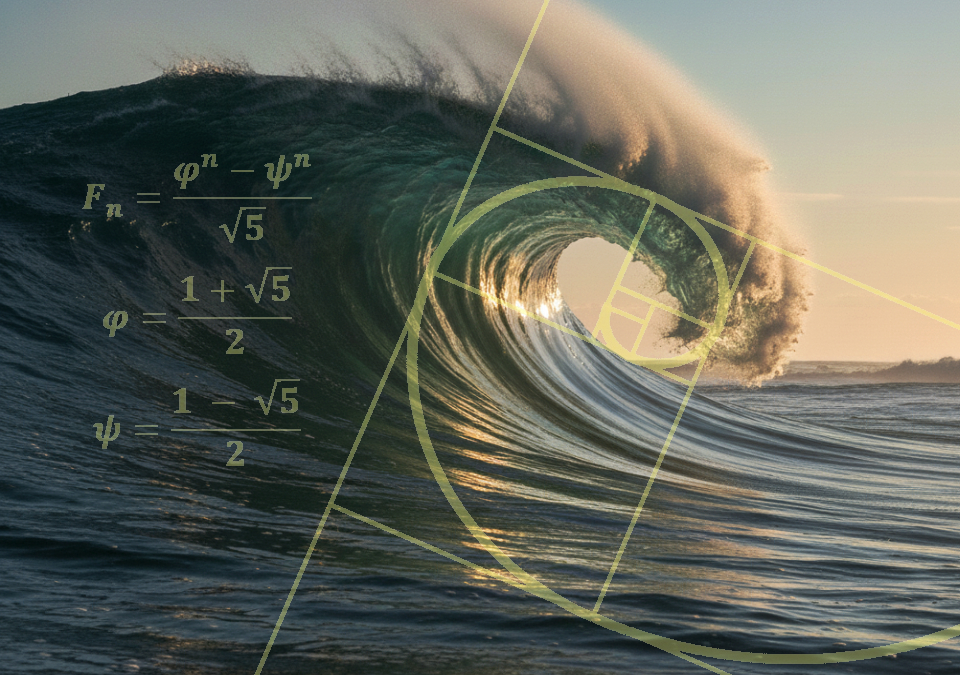
Morality is not made. It is discovered.
This single truth separates justice from tyranny, principle from preference, and freedom from illusion.
Morality is not invented by cultures or institutions. It is rooted in Truth, Autonomy, Harm, and Justice. In the previous chapter, we explored this objective moral framework, now we turn to the mechanism that governs its application: Natural Law.
Natural Law is the universal framework through which objective morality expresses itself. A binding moral compass intrinsic to reality itself, much like the laws of physics or mathematics – just as gravity governs physical interaction, Natural Law governs moral consequence.
Morality doesn’t change to fit the opinion or worldview of any individual or group of individuals – you have to change your worldview to align with morality. When you live in harmony with Natural Law, you are in alignment with objective morality. When you violate it, you invite suffering – not as punishment, but as consequence. Like with the rules of fire – when you touch a flame, you get burned. But burning isn’t punishment – it is consequence. A system of cause and effect woven into every decision we make. Violate it, and you fall. Just as you cannot walk off a cliff without falling – not because of vengeance, but because of consequence.
It is not simply a theory or philosophy, but the structure that governs human freedom and moral accountability. It is not a man-made code, but a constant set of moral principles that define right and wrong based on whether an action causes unjust harm. It applies to all people equally, in all places, at all times. No government, religion, opinion, or distance in space travel can alter its terms.
When you act in alignment with Natural Law, you promote balance, justice, and peace. When you act against it, you invite disorder, suffering, and destruction – not as punishment, but as the natural result of wrongdoing. Natural Law does not negotiate. It corrects.
To look at it from another angle, Natural Law does not dictate behavior – it reveals its cost. It does not care what we believe, only what we do. And from this unchanging moral structure, something remarkable emerges: the boundary lines of what we are free to do, and what we are not. These boundaries are our Natural Rights – not granted, but discovered – defined by the harm we may not cause, and the harm we have no obligation to endure.
Harm serves as the bridge connecting Natural Law to the concept of Natural Rights.
Natural Rights are not assigned, they are observed. They are not privileges allowed by governments, they are inherent to all human beings by virtue of our humanity – our very existence. At the core of this principle is the right to be free from harm. Rights exist because harm exist. And where there is the capacity to suffer harm, there is the inherent right to be free from it. This is the foundation of all other rights. Rights are not negotiated. They are not assigned by man-made laws. They are discovered and respected through the understanding of Natural Law.
Harm, in all its forms, is immoral because it violates Natural Law. For an individual or group of individuals to misuse their free will and transgress the Rights of others, is to take from people their well-being and self-ownership without consent. Therefore, harm always consist of some form of theft:
Murder – This is the most extreme and irreversible form of harm, representing the theft of life itself without rightful cause. Under Natural Law, no individual has the moral authority to end another person’s life unless in genuine self-defence. Taking a life unjustly is the ultimate violation of what is most sacred in all existence; life, and a person’s inherent right to exist. It is not only an act of violence, but a complete transgression against the foundational principle of Natural Law: the right to be free from harm.
Assault – This involves the violation of a person’s bodily integrity and physical autonomy. It is the theft of bodily well-being through force or threat, inflicting harm upon another without consent. Whether it manifests as a punch, a shove, or any form of physical attack, assault disregards the boundary of the self. Under Natural Law, no one has the right to use force against another unless in direct defence against aggression. To assault another is to treat their body as your property – both immoral and unlawful in Natural Law.
Rape – One of the most severe violations of personal sovereignty. Rape represents the theft of sexual autonomy. It is the ultimate act of coercion, where one imposes their will on another in the most intimate and violating way. Rape is not about desire or lust, it is about power, domination, and the total disregard for consent. In the eyes of Natural Law, it is amongst the gravest immoralities – an absolute denial of another’s right to self-ownership and bodily freedom.
Property theft – The un-Lawful taking of what rightfully belongs to another – whether material possessions, land, or labor. Property represents the physical fruits of one’s energy and time – extensions of the self. To steal from someone is to rob them of their efforts, their means of survival, and their freedom to use what they have rightfully acquired.
Trespass – The intrusion upon another’s rightful space or domain without consent, representing the theft of security and privacy. It may not always involve physical damage, but it still constitutes a violation because it disregards the sacred boundary between the self and the other. Our personal space – our homes, our phones, our bank accounts, our private moments – are all extensions of our sovereignty. To violate that space is to impose one’s presence where it is neither rightful nor welcome.
Coercion – The act of forcing another to act against their will through threats, manipulation, or violence. It is the theft of freewill choice – the cornerstone of human autonomy. True morality demands that all interactions be voluntary. When someone is coerced, their autonomy is stolen, and their moral agency violated. Under Natural Law, no one has the right to override another’s free will, regardless of justification. Consent is sacred. Coercion is its enemy.
Deception – The deliberate distortion or concealment of truth, which is the theft of informed choice. When someone is lied to, manipulated, or misled, their perception of reality is stolen. They are denied the ability to make choices based on truth. Deception is one of the most insidious violations because it often goes unseen, yet it breaks down trust and leads to further harm. For freedom and moral alignment through Natural Law, truth is not optional – it is essential.
These are not random categories. They are the moral red lines drawn by Natural Law itself. To cross them is to commit injustice. They are the very violations committed in both personal and systemic context. Not because we believe so, but because of the inherent imbalance and harm they create. When someone is coerced into medical procedures, their autonomy is stolen. When access to water or land is criminalized, Natural Rights are denied. When speech is censored through fear or force, truth itself is under attack. Every immoral act is a form of theft – a violation of another’s rightful domain. And every such violation creates imbalance, which ripples outward through individuals, families, institutions, and entire civilizations. Natural Law is the restoring force that ensures this imbalance cannot sustain itself. It is the universal rebalancer.
Natural Law is neutral, impersonal, and automatic. You don’t violate it and get punished – you violate it and suffer consequence. The consequence is not vengeance. It is correction. It is through this correction in balance that we witness the physical result of our actions.
Morality, Natural Law, and Natural Rights do not stand alone. Together, they form a living structure – a unified system of truth.
Objective Morality is the foundation. It is the universal standard that distinguishes right from wrong, based on unchanging principles: Truth, Autonomy, Harm, and Justice. It is not invented by humans – it is discovered through consequence, like a law of physics. Morality is the compass of ethical action, and it asks only one question: does this action cause unjust harm?
Morality tells us what is right.
Natural Law is what makes that morality real. It is the cause and effect system that governs moral consequence in the world. It does not require belief, agreement, or enforcement. Where morality is the compass, Natural Law is the terrain. It is the reality that corrects imbalance and reinforces alignment.
Natural Law is morality in motion – the enforcement mechanism of truth.
From this structure arise Natural Rights. If morality is the compass and Natural Law the terrain, then Natural Rights are the boundaries. These rights are not invented or assigned – they are discovered by identifying the lines that must not be crossed. Any being capable of conscious experience possesses them by nature.
Natural Rights emerge from the structure of Natural Law – they are what morality protects.
And then come legal rights – the imitation. These are permissions created by institutions, crafted into laws, and enforced by “authority.” Legal rights are temporary, conditional, and revocable. They are not based on morality – they are based on control. At best, they imitate Natural Rights. At worst, they contradict them entirely. Often, they are defended not by what is right, but by what is convenient. This is hallmark of utility over principle. A legal right might say you are free – but if it can be taken away, it was never a right to begin with.
Legal rights are not real rights – they are allowances written in the language of power. And if a law, policy, or program violates truth, autonomy, or the right to be free from harm, then it stands in opposition to the only Law that truly matters.
The only True Rights are negative rights – the right to be left alone, the right not to be harmed, the right not to be coerced. No one has the right to force another to serve, obey, fund, or surrender. All such acts are violations. All are imbalances. And all are corrected – eventually – by Natural Law.
Natural Law does not bend to legality. It does not yield to tradition. It does not respect authority. It respects only truth.
So here is the inescapable reality: If you don’t have the right to harm, no one does. Not individuals. Not institutions. Not governments. If a right does not exist in the individual, it cannot be granted to the collective.
No matter how noble the justification or how many people agree, harm remains harm. Wrong remains wrong. Authority, when used to justify harm, is simply institutionalized immorality. Natural Law does not recognize man-made authority as a moral exemption.
Rights are not given, bestowed, or created. They are inherent. If no one possesses the right to harm, no one can grant that right to another – not through laws, elections, titles, or badges. To believe otherwise is to deny the fundamental reality of Natural Law and embrace a worldview of moral relativism – a worldview where slavery can be called freedom, and theft can be called taxation.
Natural Law transcends culture, opinion, politics, religion, and time. It is an objective, unchangeable, permanent, and eternal Law of Nature – not something you get to make up. It is written in the fabric of reality itself – etched into the nature of existence. Its authority is not derived from courts or governments, but from truth and conscience. It is the very essence of justice, the moral architecture of freedom, and the foundation of peace. It is the rulebook of the Universe, guiding whether an action is rightful or wrongful based solely on one measure: harm. It is the Law of the Creator, whether you believe that Creator to be God, Nature, or Consciousness itself. It does not require belief to be real. It simply is.
But even when that structure is understood, a deeper question remains: What happens when doing what is right is no longer seen as enough?
When right are set aside for convenience, when harm is justified for the sake of progress, when principles are replaced by outcome – then we are no longer guided by morality. This is where principle gives way to utility – where what is right is replaced with what appears to work in the moment.
That shift is subtle. But its consequences are enormous.
In the next chapter, we’ll examine that shift – and the quiet cost of choosing outcomes over ethics.
“No man has the Natural Right to command his fellow man. Authority is simply force, wrapped in the cloak of law”
~ Thomas Jefferson.