SUBJECTIVE MORALITY
Where Moral Relativism Is Born
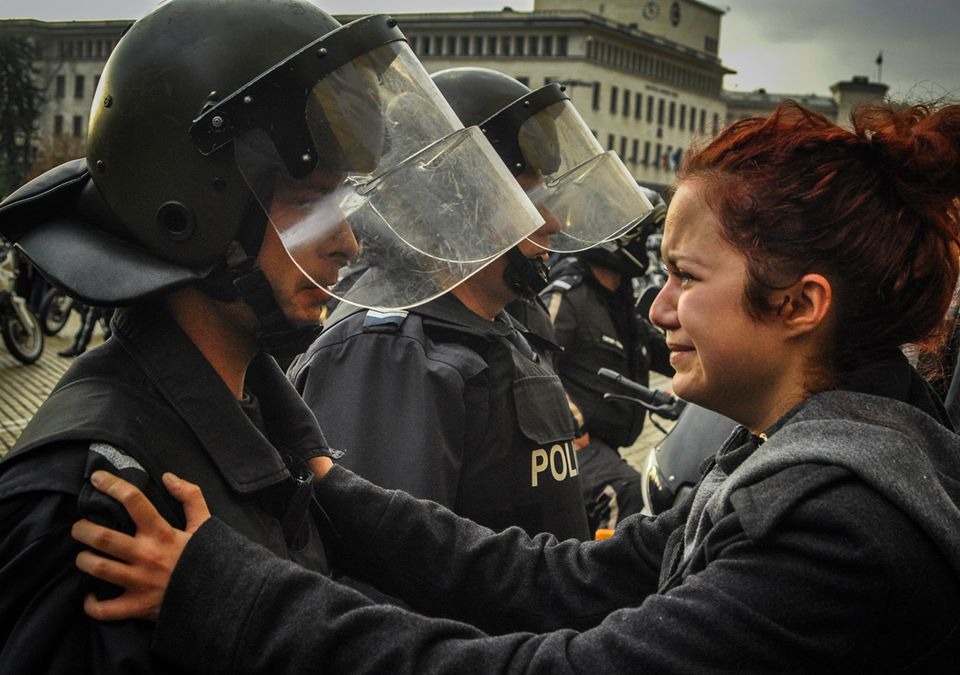
Subjective morality is the belief that moral principles aren't absolute but vary based on personal opinions, cultural norms, and situational contexts. This view holds that there is no universal right or wrong, and morality is shaped by individual perception and collective societal agreements.
This perspective - commonly called moral relativism - asserts that moral truth is flexible, differing across cultures and time periods. An act deemed acceptable in one society might be condemned as immoral in another. Consider for example, honor killings; tragically justified in some cultures as means of preserving family reputation, yet condemned in others as murder and a gross violation of human rights. Moral relativism, in this case, defends the practice as cultural norm, despite the clear harm inflicted. Similarly, child labor, accepted in certain regions as a necessary economic practice, is condemned in others as exploitation and abuse. Societies embracing moral relativism may justify forcing children into harsh labor, depriving them of education, health, and a proper childhood. These variations illustrate how moral relativism allows harmful practices to persist under the guise of cultural acceptance, while objective morality holds all actions to universal ethical standard based on Harm and Justice.
When we look at the same flawed logic of moral relativism on an individual level, subjective morality holds that each person is free to define morality according to their own preferences. Where any action then, no matter how harmful, can be excused as a matter of personal belief. An abuser might excuse violence as discipline or emotional release. A con artist may defend deception as cleverness or survival strategy. When morality is reduced to individual interpretation, accountability dissolves. Harm can always be reframed as justified, and ethical consistency vanishes. Without a shared standard rooted in objective truth, society becomes a battleground of conflicting personal "moralities", where the loudest voice or strongest hand determines what is "right".
Because moral relativism judges actions by social consensus, legal systems, or religious customs, rather than by an objective standard, morality becomes fluid and inconsistent. What's considered moral or immoral isn't determined by a fixed truth but by the prevailing opinions of a particular time and place. Laws and cultural norms shape moral judgement, even when they contradict fundamental human dignity and rights. This subjectivity deprives morality of any stable foundation, making it impossible to establish a consistent and just ethical framework.
Yet to many, subjective morality initially appears attractive. In a world rich with cultural diversity and differing worldviews, the idea that moral truth is relative can seem to encourage tolerance and discourage judgement. It suggests that individuals and societies alike can define their own codes of "right" and "wrong", promoting a sense of inclusivity and respect for personal autonomy. For some, this framework also acts as a shield against the dangers of rigid moral dogmas that have historically justified oppression or conflict. By allowing ethics to evolve with time and circumstances, subjective morality is often seen as a flexible, peaceful alternative to inflexible absolutes. These perceived benefits are part of its appeal - but as we will now explore, they come at a profound cost.
Throughout history, moral relativism has been used to justify atrocities by appealing to cultural norms and traditions. If morality is entirely subjective, then practices like slavery, genocide, and oppression cannot be universally condemned. Oppressive systems and tyrannical leaders can justify their actions simply by citing cultural or societal norms. Nazi Germany, for instance, carried out its atrocities under its own moral framework, believing its actions were righteous. Under moral relativism, one could argue that they were not "wrong" in an absolute sense - a dangerously flawed conclusion.
But the problem doesn't end in the shallows with historical atrocities or state-level framework. The deeper issue is that moral relativism doesn't just permit evil, it makes all moral claims equal, even when they directly contradict one another. It blurs the line between principle and preference, leaving no firm ground on which to resolve moral conflict.
These inherent contradictions and inconsistencies are a major flaw within subjective morality. It treats conflicting moral beliefs as equally valid, even when they oppose each other. If one person believes theft is morally acceptable while another believes it is wrong, subjective morality offers no clear resolution - both views are "correct" within their own framework. This allows moral standards to shift opportunistically, leading to hypocrisy in judgement. Governments frequently exploit this, labeling certain acts as "moral" when they serve state interests while condemning the same acts when performed by others. For example, while individual murder is considered an unforgivable act, punishable by law, governments justify killing through warfare, framing it as "national defense" or a "necessary evil". This contradiction exposes how those in power manipulate moral standards to suit their own agendas, reinforcing the instability of subjective morality.
Subjective morality also undermines accountability and responsibility. When morality is subjective, individuals and governments can easily justify their actions by claiming they align with personal or societal beliefs, regardless of the harm they inflict. This leads to the dangerous notion that "might makes right", where those in power define what is "moral". Some regimes justify censorship, political persecution, or even genocide by arguing that these actions serve the greater good according to their own moral code. But if morality is changeable by personal opinion, who gets to decide what that "greater good" is? What if that definition itself was built on lies, fear, or the pursuit of power? And why should anyone else be bound to it? Without an objective moral standard, no one can be held accountable for their actions, as any wrongdoing can be reframed as morally permissible from a particular perspective.
When morality is dictated by those in power, it becomes a tool for tyranny and manipulation. By redefining morality to suit their interests, rulers, politicians, and corporations shape ethical narratives that reinforce their power and suppress opposition. If moral standards constantly shift, no one can be held accountable, and laws can be justified as "moral" even when they blatantly violate Natural Rights. Oppressive regimes often claim that restricting free speech is a "moral necessity" to maintain order, even though such actions harm individuals by silencing dissent. By manipulating moral standards, those in power ensure their actions remain beyond reproach, further solidifying their control over the populace.
Historically, regimes like East Germany's surveillance state under the Stasi illustrate this manipulation with chilling precision. Citizens were indoctrinated to believe that informing on neighbors, friends, and even family members was a "moral duty" - an act of loyalty to the collective good rather than a violation of privacy and trust. Surveillence was framed not as oppression, but as "protection of peace". Laws were written to enshrine spying, to silence dissent, and criminalize disobedience. Not because these actions where inherently moral - but because the state said they were. Within this framework, betrayal became virtue, and silence became guilt. This is the power of subjective morality: it allows rulers to define right and wrong until obedience looks like integrity, and tyranny masquerades as "moral order".
Since no act is inherently good or evil under subjective morality, the distinction between right and wrong lies solely on the subjective opinions of individuals. In some legal systems, abortion is considered immoral and illegal, while in others its completely acceptable.
In certain Islamic cultures, for example, polygamy is accepted and even encouraged under religious law as a form of social stability and responsibility. In contrast, Western legal systems often view the same practice as immoral or illegal, citing ideals of monogamous partnership.
Similarly, euthanasia is considered a compassionate, dignified choice in countries like the Netherlands or Belgium, where legal frameworks and public opinion frame it as a moral right tied to autonomy and relief from suffering. Meanwhile, in many other nations, the practice is strictly prohibited and labelled as immoral, often based on religious beliefs about the sanctity of life.
Capital punishments offers another clear illustration. Some legal systems uphold it is a necessary tool for justice and deterrence, while other ban it entirely, viewing it as an unethical violation of Natural Rights.
These contrasts demonstrate how, under subjective morality, actions are not inherently right or wrong in an absolute sense, but dictated by cultural traditions, man-made laws, or personal beliefs. This fluidity demonstrates the core issue with subjective morality: without an objective foundation, morality becomes arbitrary, and what is deemed "right" today may be condemned tomorrow, not because of a universal ethical standard, but because of shifting societal views or political agendas.
It is precisely this instability that necessitates a deeper exploration into whether a universal, unchanging standard of right and wrong truly exists - one that transcends personal biases, cultural norms, and the manipulative agendas of those in power. In the next chapter, we will turn our attention to objective morality, a concept that offers such a stable foundation. One that leads to true Justice and human freedom.